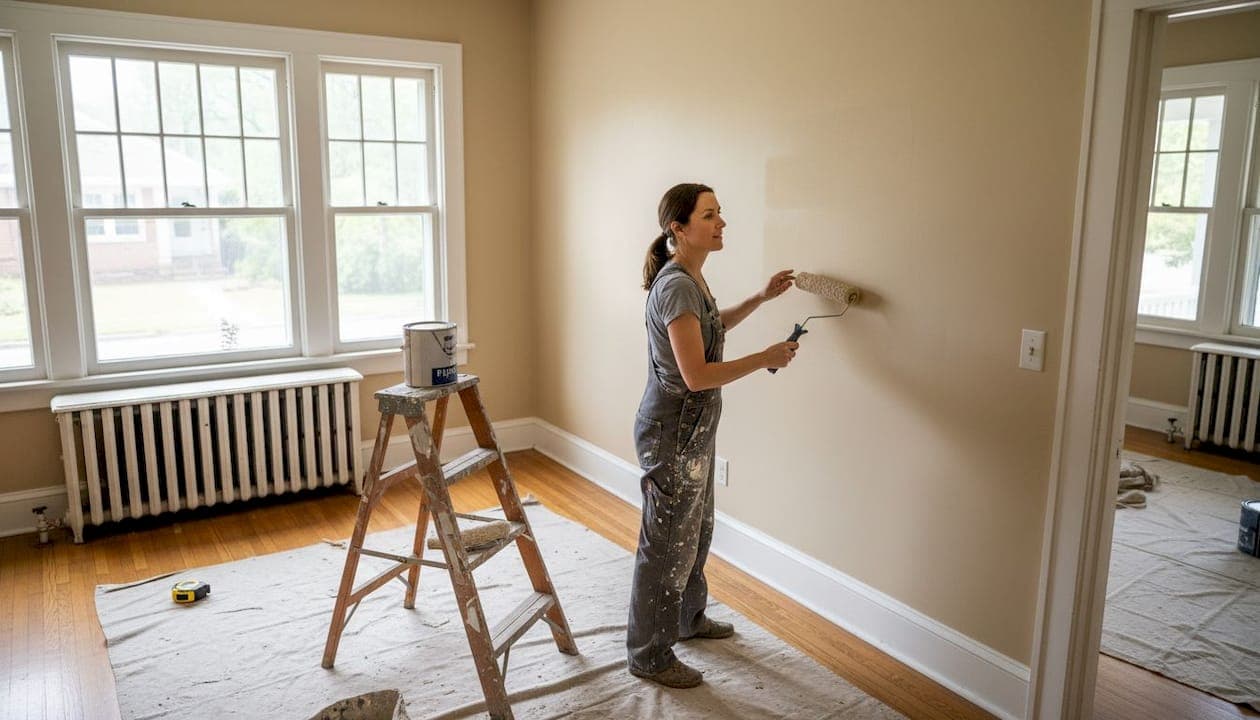
Most Cincinnati homeowners use the words "renovation" and "remodel" like they mean the same thing. They don't. A renovation vs. remodel distinction matters more than you'd think, especially when you're budgeting, pulling permits, or trying to boost your home's resale value. Renovation updates and repairs what's already there. A remodel changes the layout or function of a space entirely. Knowing which one you actually need can save you thousands of dollars and weeks of unnecessary work. This guide breaks down what home renovation really means, which projects deliver the best return, and what Cincinnati homeowners specifically need to watch out for.
Table of Contents
- Understanding home renovation: Definition and scope
- Which renovations add the most value?
- Unique considerations for Cincinnati area homes
- DIY or call a pro? Making the right choice
- The overlooked truth about home renovation decisions
- Ready to renovate? Let trusted local pros help
- Frequently asked questions
Key Takeaways
| Point | Details |
|---|---|
| Renovation defined clearly | Home renovation means updating, repairing, or modernizing without major layout changes. |
| ROI winners | Projects like garage door replacements and exterior facelifts offer the best value for your money. |
| Cincinnati-specific advice | Local rules, old materials, and weather patterns require special consideration in the tri-state area. |
| When to call pros | Simple cosmetic jobs are often DIY-friendly, but experts are crucial for safety and major updates. |
Understanding home renovation: Definition and scope
Home renovation means updating or modernizing a residence through cosmetic or structural changes without fundamentally altering its layout. Think of it as restoring or refreshing what already exists. A remodel, by contrast, changes how a space is used. Knocking down a wall to open a kitchen into a living room? That's a remodel. Replacing the kitchen cabinets and refinishing the floors? That's a renovation.
This distinction shapes everything from your budget to your permit requirements. Renovations are typically less invasive, faster to complete, and more predictable in cost. Remodels carry more risk because they often uncover hidden structural issues once walls come down.
Here's a quick comparison to keep things straight:
| Feature | Renovation | Remodel |
|---|---|---|
| Changes layout? | No | Yes |
| Alters function? | No | Yes |
| Typical cost range | Lower | Higher |
| Permit complexity | Lower | Higher |
| Timeline | Shorter | Longer |
Renovation projects generally fall into a few categories:
- Cosmetic updates: Fresh paint, new flooring, updated light fixtures
- Repair work: Fixing leaks, replacing rotted wood, patching drywall
- System upgrades: New electrical outlets, updated plumbing fixtures, ceiling fan installation
- Exterior refreshes: Repainting siding, replacing windows or doors, deck repairs
"Renovation is about improving what's there. Remodeling is about reimagining it. Most homeowners actually need the former far more often than the latter."
For most Cincinnati homeowners, the bulk of what needs doing around the house falls squarely in the renovation category. Our home renovation services cover the full range of these updates, from minor repairs to more involved refresh projects. The key takeaway here is simple: don't let the word "renovation" intimidate you. In most cases, it's more manageable than you think.
Which renovations add the most value?
Not all renovation projects are created equal when it comes to return on investment (ROI). Some updates pay you back nearly double what you spent. Others barely move the needle. Knowing the difference before you start is one of the smartest things you can do.
Here's what the data shows for top renovation ROI in 2026:
| Project | Average ROI |
|---|---|
| Garage door replacement | 194% |
| Stone veneer (exterior) | 153% |
| Minor kitchen remodel | 96% |
| Deck addition (wood) | 83% |
| Window replacement | 68% |
Those ROI benchmarks are striking, especially the garage door number. A project that costs around $4,000 can return nearly $8,000 in added home value. That's not a typo.
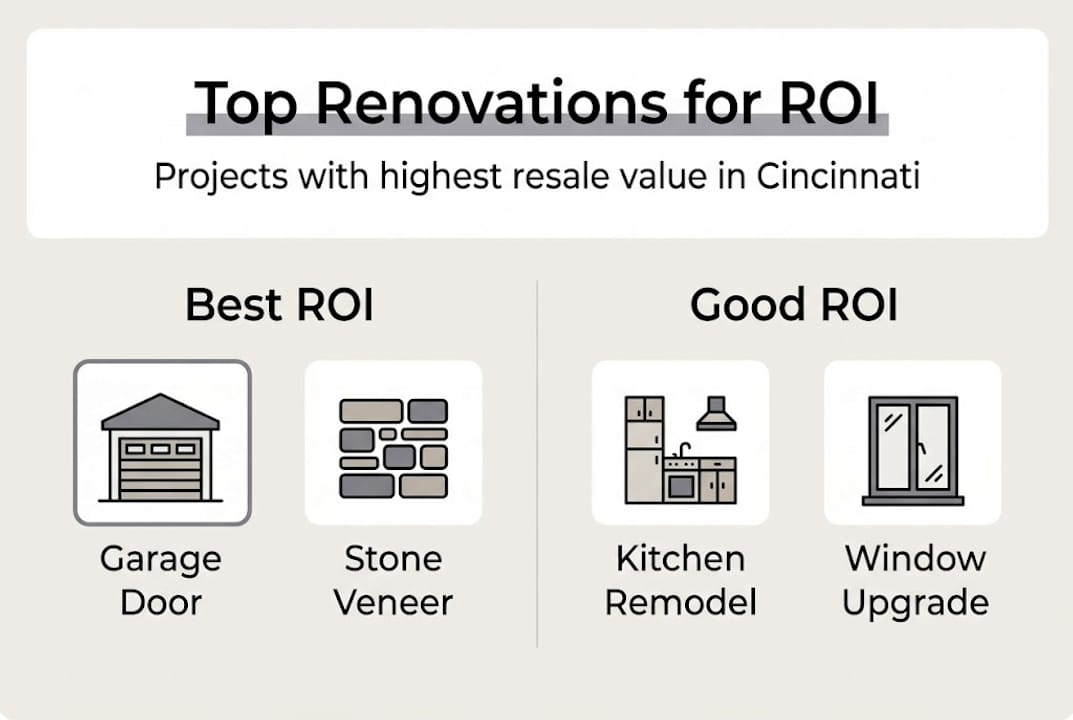
The pattern here is telling: curb appeal projects consistently outperform interior overhauls when it comes to resale. Buyers form opinions about a home before they ever walk through the front door. First impressions drive offers.
Here are the top three renovation priorities if resale value is your goal:
- Boost curb appeal first. Garage doors, exterior stone, fresh paint, and updated entry doors give you the highest dollar-for-dollar return.
- Focus on minor kitchen updates. You don't need a full gut renovation. New cabinet hardware, updated fixtures, and a fresh backsplash can transform a kitchen without the six-figure price tag.
- Address deferred maintenance. Buyers discount homes with visible neglect. Fixing leaks, replacing rotted trim, and repairing decks signals that the home has been cared for.
Pro Tip: Don't over-renovate for your neighborhood. If every comparable home on your street sells for $280,000, spending $60,000 on a kitchen remodel won't push your sale price to $340,000. Match your investment to your market.
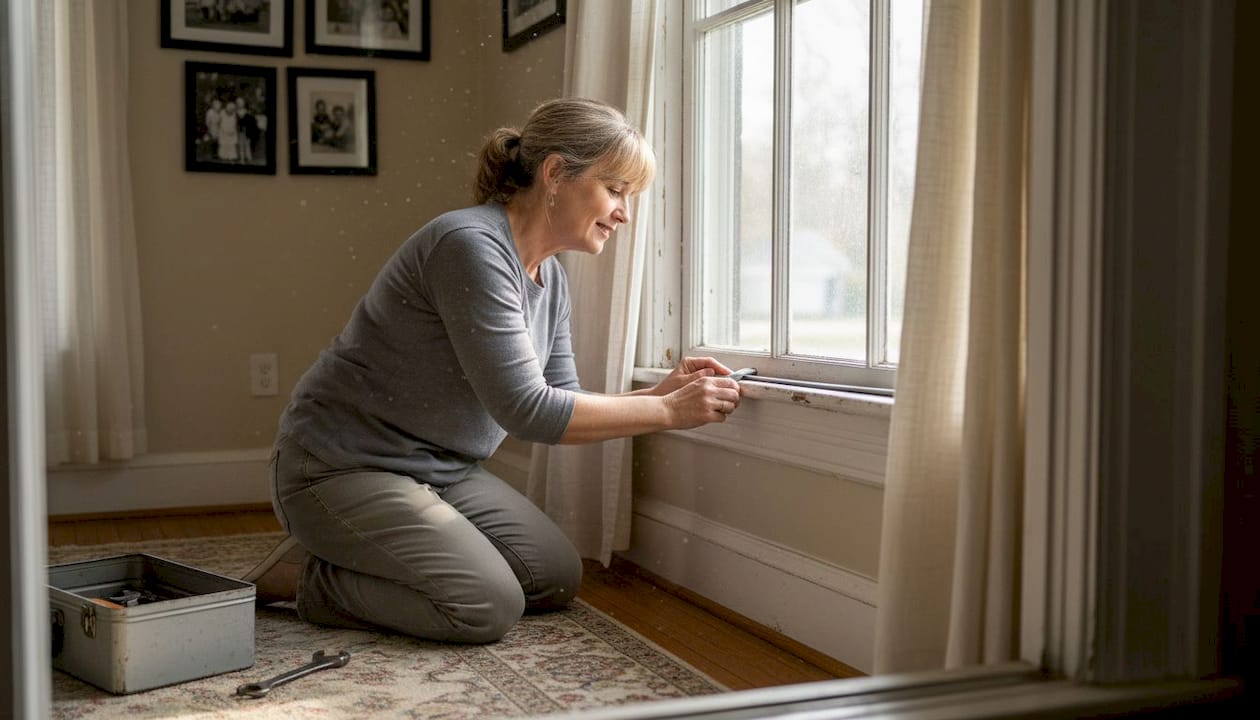
For homeowners not planning to sell, livability matters just as much as ROI. Fixing a drafty window or repairing a sagging deck makes daily life better right now. Our home repair solutions address both the cosmetic and functional sides of renovation.
Unique considerations for Cincinnati area homes
National renovation advice is a starting point, but Cincinnati's housing stock and climate create challenges that general guides simply don't cover. If your home was built before 1978, which describes a large portion of the tri-state area, you're dealing with a different set of rules.
Here's what Cincinnati homeowners need to keep on their radar:
- Lead paint: Homes built before 1978 may contain lead-based paint. Any renovation that disturbs painted surfaces requires careful handling, and in many cases, a certified contractor.
- PCB caulk: Some older buildings used caulk containing polychlorinated biphenyls (PCBs). The EPA guidelines for safe renovation around these materials are strict and non-negotiable.
- Basement moisture: Cincinnati's geography and clay-heavy soils mean basements are prone to water infiltration. Before finishing a basement, moisture control isn't optional. It's the foundation of the entire project.
- Freeze-thaw cycles: Midwest winters are hard on foundations, driveways, and exterior wood. Cracks that look minor in October can become serious structural issues by March if left unaddressed.
- Local permit requirements: Hamilton County and surrounding counties each have their own permit processes. Skipping permits on structural or electrical work can create headaches when you go to sell.
"In Cincinnati, the age of your home is one of the most important factors in planning any renovation. It changes what materials you'll encounter, what rules apply, and what surprises might be waiting inside the walls."
Pro Tip: If your home was built before 1978, always test for lead paint before sanding, cutting, or disturbing any painted surface. Test kits are inexpensive and widely available at hardware stores. It's a 10-minute step that can protect your family's health.
Understanding these local factors isn't meant to scare you away from renovating. It's meant to help you plan smarter, budget accurately, and avoid the kind of costly surprises that derail projects mid-stream.
DIY or call a pro? Making the right choice
The appeal of DIY renovation is real. You save on labor, you work on your own schedule, and there's genuine satisfaction in fixing something yourself. But the line between a smart DIY project and an expensive mistake is thinner than most homeowners realize.
Cosmetic updates are generally DIY-friendly, but professional help is the right call for anything involving structure, compliance, or hazardous materials. Here's a practical checklist to guide your decision:
- Is it cosmetic only? Painting walls, swapping cabinet hardware, or assembling furniture? Go for it.
- Does it involve electrical or plumbing? Replacing a light switch or a faucet is manageable for a confident DIYer. Running new circuits or moving drain lines is not.
- Is your home pre-1978? Lead paint and PCB concerns make professional handling the safer and often legally required choice.
- Are permits required? If a permit is needed, a licensed contractor typically handles that process. DIY permit pulls are possible but complicated.
- What's the cost of getting it wrong? A bad paint job is easy to fix. A faulty electrical connection or an improperly supported deck is not.
Pro Tip: When in doubt, get a professional opinion before starting. Many contractors will do a quick assessment at low or no cost. That conversation alone can save you from a project that spirals out of control.
For Cincinnati homeowners, working with trusted home repair professionals means you get someone who knows local code, understands the quirks of older homes, and can spot problems before they become expensive. Whether it's a leaking pipe, a rotted window frame, or a ceiling fan that needs installing, the right help makes the job faster, safer, and cleaner. Our comprehensive renovation help covers the full range of what most homeowners need.
The overlooked truth about home renovation decisions
After working with homeowners across the Cincinnati tri-state area, one pattern stands out clearly: people tend to either overthink renovation or underthink it. Both extremes cost money.
Overthinking looks like waiting years to fix a small leak because you're not sure if you need a full bathroom remodel. By the time you act, the water damage has spread and the repair bill is three times what it would have been.
Underthinking looks like jumping into a major project without checking for lead paint, skipping permits, or hiring the cheapest contractor without verifying their work.
The sweet spot is starting small, getting expert eyes on the problem early, and letting the scope of work be driven by what the home actually needs. Minor updates done well consistently outperform ambitious overhauls done poorly. Cincinnati's older housing stock rewards homeowners who respect the age and character of their homes rather than trying to gut and modernize everything at once. Local knowledge matters here. A contractor who understands freeze-thaw foundation issues or knows how to handle pre-1978 materials is worth far more than a low bid from someone who doesn't.
Ready to renovate? Let trusted local pros help
Knowing what you need is half the battle. The other half is finding someone you can trust to do the work right.

Our team of Cincinnati home renovation experts specializes in exactly the kind of repair, replace, and renovate work that tri-state homeowners need most. From fixing leaks and replacing rotted wood to finishing basements and updating electrical fixtures, we handle projects of every size. Check out our full list of renovation offerings to see what we cover, or browse our recent renovation projects to get a sense of the quality we bring to every job. When you're ready to move from planning to doing, we're ready to help.
Frequently asked questions
What counts as a renovation versus a remodel?
A renovation updates or repairs existing spaces without altering their structure or purpose. A remodel changes the layout or function of a space entirely.
Which home improvements have the best ROI for resale?
Garage door replacements at 194%, stone veneer, and minor kitchen remodels consistently deliver the highest return, with curb appeal projects leading the pack.
Are there special rules for old homes in Cincinnati?
Yes. Homes built before 1978 may require lead paint or PCB handling by certified contractors, and Cincinnati basements frequently need moisture control before any finishing work begins.
When should I hire a professional for my renovation?
Hire a pro for structural repairs, electrical or plumbing work, code compliance, and hazardous material situations. Minor cosmetic updates are generally safe for a confident DIYer.