
Your living room feels stuck in another decade. The layout is awkward, the lighting is dim, and every time you walk in, you think "something has to change." If you're a Cincinnati homeowner staring at a space that just isn't working, you're not alone. Renovating a living space can feel overwhelming without a clear starting point, especially when you're juggling budgets, permits, and contractor decisions. This guide walks you through every stage of the process, from setting goals and pulling permits to managing timelines and knowing when to call in a pro. Cincinnati-specific costs, codes, and tips are included throughout.
Table of Contents
- Assessing your living space and setting renovation goals
- Planning your renovation: Inspiration, design, and materials
- DIY vs hiring professionals: Making the right choice
- Permits and preparation: The Cincinnati homeowner's checklist
- Renovation in action: Phases, timelines, and what to expect
- The truth most DIY renovators in Cincinnati miss
- Partner with Cincinnati's trusted home repair experts
- Frequently asked questions
Key Takeaways
| Point | Details |
|---|---|
| Set realistic goals | Assess your living space and budget to prioritize what matters most for your renovation. |
| Plan carefully | Good design, durable materials, and a solid plan help avoid costly mistakes. |
| Get proper permits | Cincinnati requires permits for most major renovations; check local requirements to stay compliant. |
| DIY wisely | Handle simple tasks yourself, but hire licensed pros for technical work for safety and quality. |
| Partner with experts | Combining your effort with local professionals produces better, longer-lasting results. |
Assessing your living space and setting renovation goals
Before you buy a single tile or paint swatch, take a hard look at what you actually have. Walk through each room and ask yourself: what works, what frustrates me, and what would I change first? Be specific. "The living room feels dark" is a starting point, but "we need two more light sources and the windows are too small" is a renovation goal.
Start with a room-by-room assessment using these focus areas:
- Functionality: Does the layout support how you actually use the space?
- Traffic flow: Are there bottlenecks or awkward pathways?
- Storage: Is clutter a symptom of poor design?
- Condition: Are there signs of water damage, rotten trim, or outdated fixtures?
- Lighting: Is natural and artificial light working together?
Once you've identified the pain points, rank them by priority. Not everything needs to happen at once, and trying to do it all simultaneously is a fast track to budget overruns.
Speaking of budgets, Cincinnati homeowners should anchor their numbers to local market realities. Cincinnati bathroom remodel costs provide a useful regional benchmark for understanding labor and material pricing in the tri-state area.
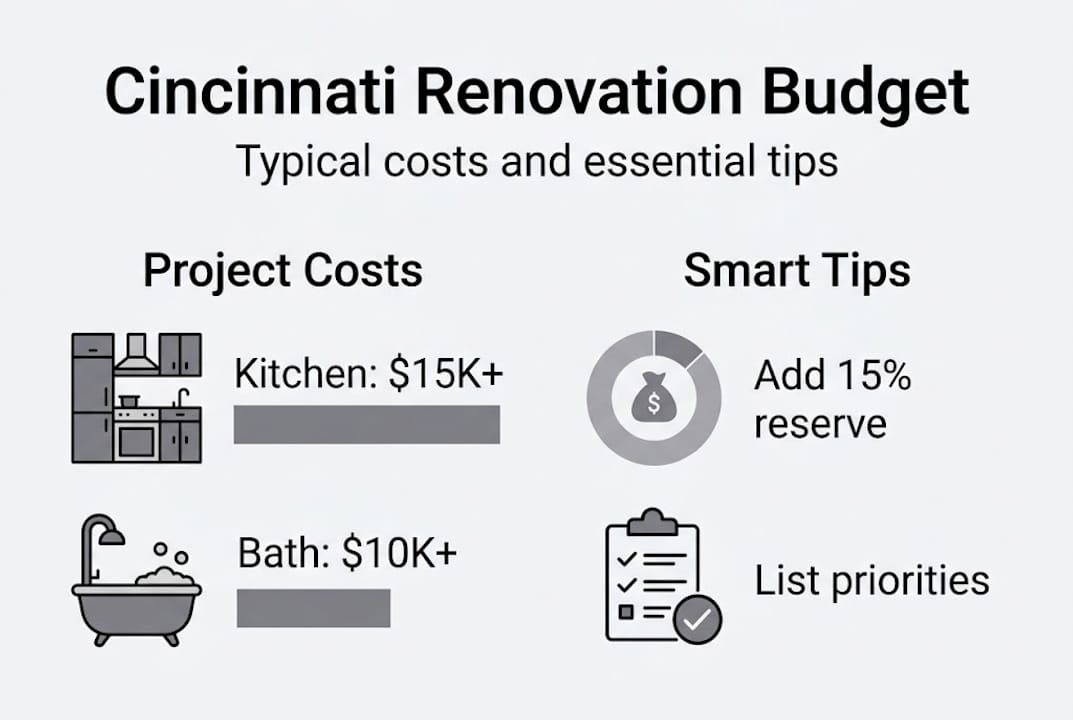
| Project type | Estimated Cincinnati cost range |
|---|---|
| Kitchen renovation | $15,000 to $60,000+ |
| Bathroom remodel | $8,000 to $25,000 |
| Basement finishing | $20,000 to $50,000 |
| Living room update | $5,000 to $30,000 |
Always add a 15 to 20 percent contingency to your budget. Surprises happen, especially in older Cincinnati homes where you might find outdated wiring, plumbing that doesn't meet current code, or hidden moisture damage once walls come down.
Pro Tip: Write your "must-have" and "nice-to-have" lists before talking to any contractor. This keeps conversations focused and prevents scope creep from inflating your costs before the first nail is pulled.
Planning your renovation: Inspiration, design, and materials
With your goals and budget set, it's time to turn inspiration into actionable plans and smart design choices. This phase is where a lot of homeowners rush, and it almost always costs them later.
Start gathering ideas from sources like Houzz, Pinterest, or even walking through model homes in the Cincinnati area. Pay attention to what you keep saving. Patterns in your favorites reveal your actual style preferences, not just what looks good in a magazine.
Once you have a visual direction, focus on layout. A well-planned layout considers both function and flow, meaning furniture placement, traffic paths, and focal points all work together rather than competing.

Material selection is where Cincinnati's climate becomes a real factor. Humid summers, cold winters, and everything in between mean your choices need to hold up to temperature swings and moisture. Here's a quick comparison:
| Material category | Budget option | Mid-range option | Premium option |
|---|---|---|---|
| Flooring | Vinyl plank | Engineered hardwood | Solid hardwood |
| Paint finish | Flat/matte | Eggshell | Satin or semi-gloss |
| Fixtures | Builder grade | Mid-grade brushed nickel | Solid brass or custom |
| Trim | MDF painted | Poplar painted | Oak stained |
For most Cincinnati families, engineered hardwood and eggshell paint hit the sweet spot between durability and cost. Vinyl plank is excellent in basements or high-moisture areas.
Before finalizing your plan, run through this checklist:
- Confirm lighting plan includes ambient, task, and accent layers
- Choose a cohesive color palette with no more than three main tones
- Verify all fixture selections match the plumbing and electrical rough-in locations
- Confirm material lead times, some items take 6 to 8 weeks to arrive
Rushing material decisions is one of the top reasons renovations stall mid-project. Order early.
DIY vs hiring professionals: Making the right choice
Planning done, you now face the critical decision between rolling up your sleeves or calling in reinforcements. The honest answer is: most successful renovations involve both.
There are tasks where DIY makes real sense. Painting is the classic example. So is demo work, furniture assembly, landscaping prep, and installing simple fixtures like towel bars or light switch covers. These jobs save money without creating safety or code risks.
But some work should always go to licensed professionals for renovation. Electrical panel work, new circuit installation, load-bearing wall removal, and any plumbing that touches supply lines or drain stacks are not DIY territory, regardless of how many YouTube videos you've watched.
Safety warning: Electrical and plumbing mistakes don't just fail inspections. They cause fires, flooding, and serious injury. In Cincinnati, unpermitted electrical or plumbing work can also void your homeowner's insurance and create major issues when you sell.
Here's a practical breakdown of where the line usually falls:
- Safe for DIY: Painting, demo of non-structural walls, flooring installation (snap-lock), cabinet hardware, furniture assembly
- Hire a pro: Electrical wiring, plumbing rough-in, window and door replacement, structural changes, ceiling fan installation
- Gray area: Tile work, trim installation, deck repairs (depends on complexity and permits)
Pro Tip: When interviewing contractors, ask for references from Cincinnati-area projects completed in the last 12 months. Local experience matters because Cincinnati has specific code requirements and older housing stock that out-of-town crews sometimes underestimate.
A design-build firm or experienced local handyman service can also streamline communication significantly. Instead of managing a plumber, electrician, and carpenter separately, one point of contact coordinates the whole project, which reduces scheduling conflicts and finger-pointing when something goes wrong.
Permits and preparation: The Cincinnati homeowner's checklist
Regardless of who does the work, Cincinnati-specific regulations and preparation are crucial for a smooth start. Skipping this step is the single most expensive mistake homeowners make.
The City of Cincinnati requires permits for a wide range of renovation work. Check the Buildings Calendar for current scheduling and processing information. You can apply online through the city's portal or visit the Buildings and Inspections department in person.
Here's a step-by-step approach to getting your permit:
- Identify your project scope and confirm whether it requires a permit
- Gather your project documents (plans, contractor license if applicable, site address)
- Submit your application online or in person at Cincinnati City Hall
- Pay the required fee, which varies based on project value
- Wait for approval, typically 5 to 15 business days for standard residential projects
- Schedule required inspections at each phase of work
- Receive final sign-off before closing walls or finishing surfaces
For a quick reference on what typically requires a permit, here's a local guide:
| Renovation task | Permit required? | Prep step |
|---|---|---|
| Painting or wallpaper | No | Protect floors and furniture |
| Flooring replacement | Usually no | Clear room completely |
| Electrical work | Yes | Hire licensed electrician |
| Plumbing changes | Yes | Shut off water supply |
| Window or door replacement | Yes | Measure and order in advance |
| Basement finishing | Yes | Check for moisture first |
Understanding permit requirements in Cincinnati before you start protects your investment and keeps your project legal. Beyond permits, physically preparing your home matters too. Clear the work area completely, protect hardwood floors with rosin paper, and make a plan for pets and kids during noisy or dusty phases.
Renovation in action: Phases, timelines, and what to expect
With your home prepped and permits secured, renovation begins. Here's how it unfolds in practical terms, because knowing what comes next keeps stress levels manageable.
Most interior renovations follow these construction phases and services:
- Demolition: Removal of old materials, surfaces, and fixtures. Usually 1 to 3 days depending on scope.
- Structural work: Any load-bearing changes, framing additions, or subfloor repairs. 3 to 7 days.
- MEP rough-in: Mechanical, electrical, and plumbing work happens before walls close. 3 to 10 days, with inspections required.
- Insulation and drywall: Walls and ceilings get closed up. 3 to 7 days.
- Finishes: Flooring, painting, trim, cabinets, and fixtures. This is often the longest phase at 1 to 3 weeks.
- Final walkthrough: Punch list review, touch-ups, and inspection sign-off.
According to renovation timeline guidance, most interior projects run 2 to 6 weeks for planning and several months for full execution depending on scope.
Managing daily life during renovation takes real effort. Set up a temporary living area away from the work zone. Use plastic sheeting to contain dust. If you have pets, arrange for them to stay elsewhere during loud or hazardous phases.
Pro Tip: Set a weekly check-in with your contractor every Monday morning. Review what was completed, what's planned for the week, and flag any issues early. This single habit prevents most communication breakdowns and keeps projects on schedule.
The final walkthrough is your last chance to catch anything before the crew leaves. Walk every inch of the finished space with your punch list in hand and don't sign off until every item is resolved.
The truth most DIY renovators in Cincinnati miss
Here's something most renovation guides won't tell you: the homeowners who end up happiest with their finished spaces are almost never the ones who went fully DIY or fully hands-off. They're the ones who did both, strategically.
We've seen it repeatedly in Cincinnati homes. A homeowner tackles painting and demo to save money, then brings in skilled tradespeople for electrical, plumbing, and carpentry. The result is a project that stays on budget, passes inspection, and actually looks finished. Going solo on work that requires licensed expertise leads to failed inspections, costly rework, and delays that stretch a 6-week project into 6 months.
Local pros bring more than just skills. They know Cincinnati's building code quirks, have relationships with local suppliers, and understand what inspectors in Hamilton County actually look for. That knowledge is worth real money. Blending your own effort with balancing DIY and professionals is not a compromise. It's the smartest renovation strategy available to any Cincinnati homeowner.
Partner with Cincinnati's trusted home repair experts
Ready to move from planning to action? Whether you need a single repair or a full room transformation, having the right team behind you makes all the difference.

At 513 Handyman, we repair, replace, and renovate across the Cincinnati tri-state area. From electrical and plumbing fixes to carpentry, bath remodeling, basement finishing, and furniture assembly, our Cincinnati home repair experts handle the full range of home improvement needs. Browse our services to see what we cover, and check out our renovation project photos for real examples of local work. We know Cincinnati homes, we know the codes, and we're ready to help you get your space exactly where you want it.
Frequently asked questions
What is the average cost to renovate a living room in Cincinnati?
Most mid-range living room renovations in Cincinnati start between $10,000 and $30,000, depending on size, materials, and labor. Cincinnati project costs vary based on the scope and finish level you choose.
Do I need a permit for interior renovations in Cincinnati?
Permits are required for structural, electrical, plumbing, or addition work in Cincinnati. Cosmetic changes like painting or replacing hardware typically do not require one. Check the Cincinnati Buildings Calendar to confirm your specific project.
How long does a typical living space renovation take?
Most interior renovations require 2 to 6 weeks of planning before work begins, and full completion can take several months for larger scopes. Renovation timelines depend heavily on permit processing, material lead times, and contractor availability.
What are some common mistakes to avoid during renovation?
Underbudgeting, skipping permits, and underestimating construction disruption are the most common pitfalls. Setting aside a 15 to 20 percent contingency and reviewing Cincinnati remodel cost realities before you start helps you avoid the most painful surprises.