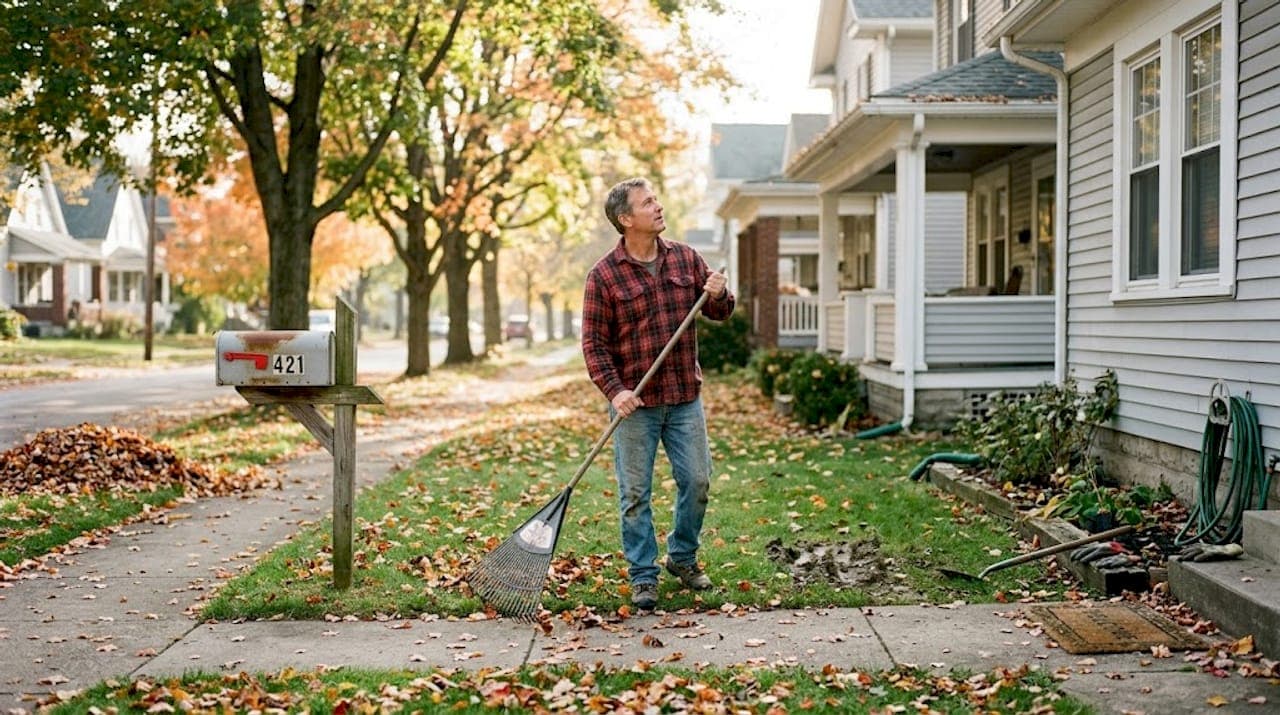
Most homeowners think seasonal maintenance means cleaning out the garage or power washing the driveway. That's a comfortable myth. Real seasonal home upkeep is prevention-focused work that shields your property from structural damage, keeps systems running, and protects your investment year-round. In Cincinnati and the surrounding tri-state area, where winters freeze hard and summers bring humidity and heavy rain, skipping these tasks isn't just inconvenient. It's expensive. This article breaks down what seasonal upkeep actually covers, why local climate conditions make it non-negotiable, which tasks to prioritize each season, and when to call in a professional instead of going it alone.
Table of Contents
- What is seasonal home upkeep?
- Why Cincinnati-area homes need a seasonal approach
- Core seasonal maintenance tasks and timing
- Real-world pitfalls and expert strategies
- A Cincinnati expert's take: The real ROI of seasonal upkeep
- How Guaranteed Home Repair makes seasonal upkeep simple
- Frequently asked questions
Key Takeaways
| Point | Details |
|---|---|
| Prevention is key | Seasonal home upkeep prevents expensive damage and preserves property value. |
| Local climate matters | Cincinnati homes need special attention to moisture and HVAC impacts each season. |
| Prioritize big risks | Focus on water, HVAC, and safety checks before less critical maintenance tasks. |
| Know DIY from pro jobs | Some upkeep tasks should always be handled by licensed professionals. |
What is seasonal home upkeep?
Let's clear something up right away. Seasonal home upkeep is not the same as tidying up or touching up paint before selling. It's a structured, recurring set of home inspection, cleaning, testing, and servicing tasks scheduled around the four seasons to prevent functional failures and deterioration, not just cosmetic work. Think of it as a physical for your house, done four times a year.
The scope covers more ground than most people realize. Roof and gutters, windows and doors, plumbing and water management, HVAC systems, electrical safety checks, and foundation conditions all fall under the seasonal upkeep umbrella. Any system that interacts with weather, temperature, or moisture is fair game.
Here's how seasonal upkeep differs from general maintenance. General maintenance is reactive. Something breaks, you fix it. Seasonal upkeep is proactive. You inspect, test, and service before the problem shows up. That timing difference is everything. Catching a cracked window seal in October costs far less than dealing with mold behind the wall in February.
For local maintenance guidance specific to your property type and age, it's worth consulting with someone who knows Cincinnati homes.
Seasonal home upkeep is about creating a repeating cycle of protection. The goal isn't a perfect checklist every time. It's catching the issues that lead to real damage before they get a chance to grow.
Here's a quick look at core tasks by season and home area:
| Season | Home area | Key task |
|---|---|---|
| Spring | Gutters and roof | Clear debris, inspect shingles |
| Spring | Plumbing | Check for freeze damage, test irrigation |
| Summer | HVAC | Service cooling system, change filters |
| Summer | Exterior | Inspect caulk, touch up paint |
| Fall | Gutters | Clear leaves, check downspout flow |
| Fall | Windows and doors | Inspect seals, add weatherstripping |
| Winter | Plumbing | Shut off outdoor faucets, insulate pipes |
| Winter | Safety systems | Test smoke and CO detectors, check heating |
Notice that no system gets a full year off. That's by design.
Why Cincinnati-area homes need a seasonal approach
Defining seasonal upkeep is only the start. In Cincinnati, local climate makes it non-negotiable.
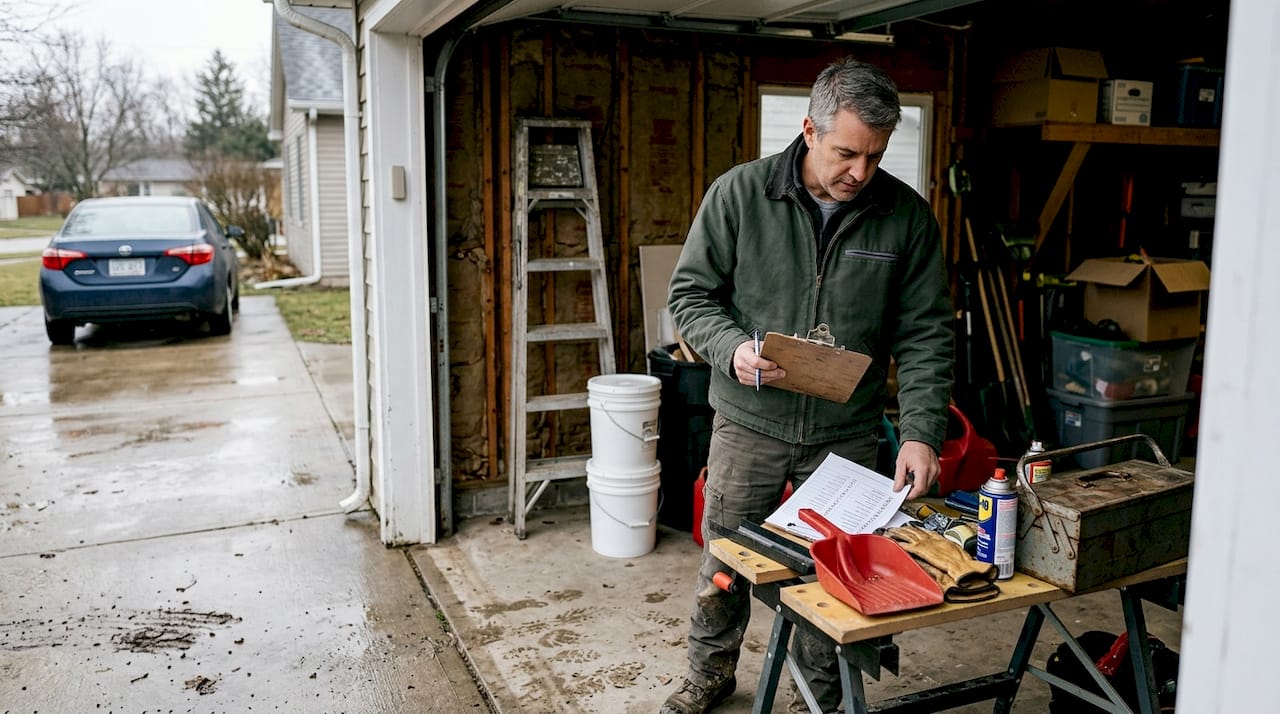
The tri-state area sits in a weather zone that delivers the full package: hard freezes, heavy spring rains, humid summers, and leaf-clogged falls. That variety of stress is rough on homes. Freeze-thaw cycles crack masonry and push water into roof edges. Spring rains overwhelm clogged gutters and send water toward foundations. Summer humidity sneaks into attics and crawl spaces. Each season creates a different threat, and they build on each other.
For Cincinnati tri-state-area owners, a seasonal approach weighted toward moisture management and temperature swings is the right framework. Moisture issues are the single most common driver of expensive home repairs here. Water finds every gap, and Cincinnati gives it plenty of chances.
Here's how the two major threat categories compare:
| Category | Common causes | Typical damage |
|---|---|---|
| Moisture-related | Clogged gutters, failed seals, heavy rain | Rot, mold, foundation issues |
| Temperature-related | Freeze-thaw cycles, extreme heat | Cracked masonry, pipe bursts, HVAC failure |
Both categories are preventable with the right seasonal focus.
Top local priorities for Cincinnati-area homeowners:
- Gutters and downspouts: Clogged gutters are the most direct path to foundation and fascia damage
- Roof edges and flashing: Freeze-thaw cycles target these areas every winter
- Exterior caulk and seals: Moisture gets in through gaps around windows, doors, and trim
- HVAC systems: Both heating and cooling take a beating here, and failures are costly
- Sump pumps: Spring rains make a working sump pump non-negotiable in many local homes
Pro Tip: Don't just clear gutters once in fall. Check them again after the last winter snowmelt. Debris and ice can leave partial blockages that aren't obvious until spring rains start overflowing them.
Having region-specific maintenance tips matched to your home's age and construction type makes a real difference in prioritizing where to focus first.
Core seasonal maintenance tasks and timing
Understanding why matters, but it's even more important to know what to do and when.
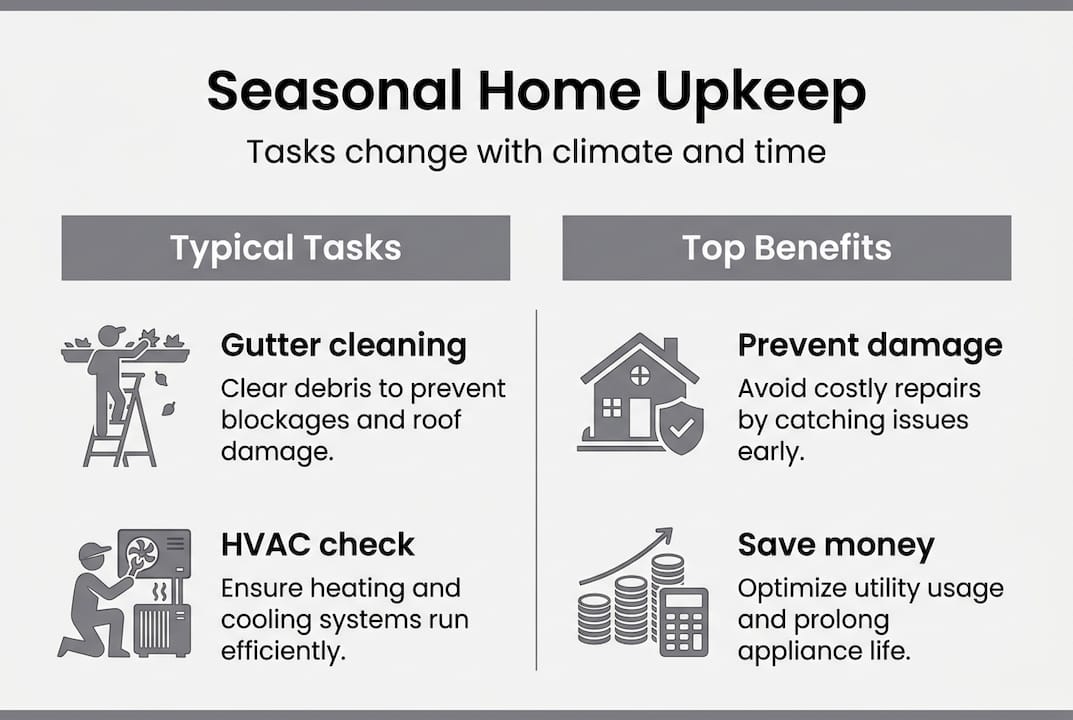
Seasonal maintenance works best as a sequence. Each season's tasks prepare your home for the next one. Miss a step and you're setting yourself up for a bigger problem three months later. Common seasonal tasks include clearing and inspecting gutters and downspouts, inspecting roof and exterior surfaces, and preparing your HVAC for the coming season.
Here's a practical sequence to follow:
- Spring: Clear gutters of winter debris. Inspect the roof for damaged or missing shingles. Check exterior caulk and paint. Start up irrigation and inspect for leaks. Test sump pump operation before rains peak.
- Summer: Service your cooling system and replace air filters. Walk the exterior and touch up any cracked caulk or peeling paint before humidity locks in damage. Inspect decks and wood structures for rot or loose fasteners.
- Fall: Clear gutters thoroughly after leaf drop. Inspect window and door seals and add weatherstripping where needed. Schedule heating system service before first use. Drain and shut off irrigation.
- Winter: Check for ice dam conditions at roof edges. Insulate exposed pipes in unheated spaces. Test smoke and carbon monoxide detectors. Verify that your heating system is running at full efficiency.
Pro Tip: Not every task on this list is a good candidate for DIY. HVAC servicing, roof repairs, and anything involving gas lines or major plumbing work should go to a licensed professional. Doing it wrong can void warranties and create safety hazards.
Plumbing gets its own special mention here. The EPA WaterSense program recommends seasonal checks for leaks, irrigation systems, and fixtures as part of regular home care. Homes with undetected leaks can waste more than 90 gallons of water per day, which adds up fast on your utility bill and can cause hidden water damage over time. Spring startup and fall winterization are the two highest-value plumbing checkpoints of the year.
For a full list of seasonal home services that match these priorities, it's worth reviewing what a local handyman team can handle professionally.
Real-world pitfalls and expert strategies
Scheduling tasks is only part of the equation. Avoiding costly mistakes is just as crucial.
The most common trap homeowners fall into is prioritizing the visible over the consequential. Fresh paint looks great. But if the gutters are clogged and sending water down the side of the house, the paint job is just decoration on a water-damaged wall. Water issues often start quietly. Clogged gutters can lead to rot, foundation exposure, and interior moisture problems long before the damage is visible from the curb.
Here are the mistakes we see most often:
- Skipping the post-winter roof inspection, which is when freeze damage becomes apparent
- Addressing cosmetic issues while ignoring HVAC, roof, or plumbing systems
- Waiting until something fails to schedule seasonal service
- Overlooking sump pump testing before spring rain season
- Ignoring small leaks or seal failures because they seem minor
The expert approach is to prioritize by consequence, not by visibility. Water intrusion, HVAC failure, and life-safety systems like smoke detectors and carbon monoxide alarms come first. Everything else comes after.
When it comes to seasonal maintenance, the items most likely to cost you $5,000 or more are almost never the ones you can see from the street. Focus first on the systems managing water, air, and safety.
Knowing when to call a licensed handyman is itself a skill. Safety-critical systems, anything involving code compliance, and repairs that affect your home's warranty coverage are all cases where professional help is worth the cost. A good technician also catches secondary issues that a homeowner's checklist would miss entirely.
A Cincinnati expert's take: The real ROI of seasonal upkeep
Having covered the essentials, here's what our hands-on experience reveals about what really pays off.
Most homeowners approach seasonal upkeep as a box-checking exercise. Work through the list, cross things off, feel productive. That mindset isn't wrong, but it misses where the real return on investment lives. In Cincinnati, the homes that hold their value and avoid major repair bills aren't the ones with the longest checklists. They're the ones where moisture and HVAC issues get handled early, every single year, without exception.
Think about it this way. A $200 gutter cleaning prevents a $4,000 fascia and soffit repair. A $150 HVAC tuneup prevents a $3,500 emergency replacement in July. The math on prevention is overwhelming. But it only works when you do it before the damage starts, not after.
The other insight worth sharing is this: an experienced eye sees things a checklist doesn't. There are moisture patterns, wear indicators, and early-stage failures that only stand out to someone who has seen hundreds of Cincinnati homes. Sometimes the smartest seasonal investment is a well-timed inspection by someone who knows what to look for. That's the Cincinnati home care approach that actually moves the needle on long-term property value.
How Guaranteed Home Repair makes seasonal upkeep simple
For those ready to protect their property the easy way, here's how local experts can help.
Seasonal upkeep covers a lot of ground, and some of it genuinely requires a professional. Guaranteed Home Repair's team knows Cincinnati's climate, its common home construction types, and the seasonal risks that show up year after year. Whether you need gutters cleaned and inspected, window seals replaced, plumbing winterized, or a full seasonal walkthrough by someone who can spot trouble before it grows, we handle it all under our repair, replace, renovate approach.

From plumbing and electrical to carpentry, drain cleaning, and bath or basement upgrades, our local trusted professionals are ready to handle what your seasonal checklist turns up. Browse our Cincinnati home upkeep services or check out project results from real local homes. Reach out today and let's build a seasonal maintenance plan that actually protects your investment.
Frequently asked questions
How often should I clear my gutters in the Cincinnati area?
Clear gutters at least twice yearly, once after winter ends and once after fall leaf drop, to prevent water backup, fascia rot, and foundation water damage.
Which tasks should a licensed professional handle?
Safety-critical work like HVAC servicing, major roof repairs, and plumbing fixes should go to licensed pros. Safety-critical systems carry warranty and code implications that DIY work can compromise.
What's the risk of skipping seasonal home upkeep?
Skipping routine checks increases the risk of water intrusion, HVAC breakdowns, and structural damage. Skipping routine checks can lead to rot, water pooling, and repairs that cost far more than prevention would have.
Are there maintenance tasks unique to the Cincinnati tri-state climate?
Yes. Cincinnati's combination of freeze-thaw cycles and heavy seasonal moisture makes gutter maintenance and seasonal HVAC prep especially important compared to drier or more stable climates.